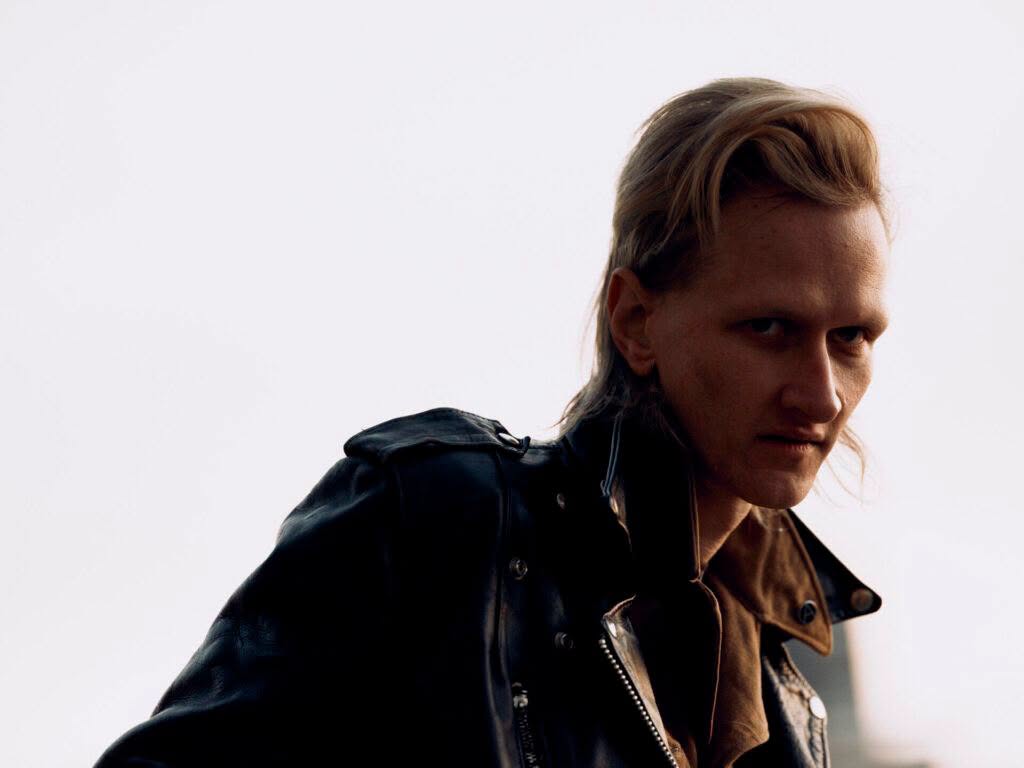
When iOTA pulled his main guitar out of storage, its electronics had rotted. It had been packed away for around ten years while his career in theatre took over, and he’d begun to think that part of his life might be behind him.
“I had it in storage for at least about 10 years,” he shared in our recent Radio Carrum chat.
Back when covid had arrive, theatre work dried up somewhat and so he went back to the storage unit. The guitar needed a little tlc, but once he started playing again, he realised how much he’d missed it.
These days, it stays close. During our conversation, it’s right there with him.
“It’s with me all the time. And I just love it.”
That rekindled relationship has led to Hours Disappear, his first album in a decade.
Released on 25 September through MGM Distribution, it brings together new songs and acoustic versions of old favourites. He’s taking it on the road, beginning at Melbourne’s Brunswick Ballroom on Friday 16 October.
Long before the theatre roles and film appearances, iOTA made his name with his 1999 debut, The Hip Bone Connection. Triple J got behind it, it received an ARIA nom, and a couple more albums followed.
When his time with the record company came to an end, he wasn’t sure what came next, but an email from a theatre producer offered a possibility: had he heard of Hedwig and the Angry Inch, and would he consider auditioning?
He had heard of it. Acting was another matter, but he decided to have a go.
“I just sort of naively barrelled into it.”
The learning curve was steep: pages and pages of dialogue to memorise, stage directions to follow and choreography to learn. iOTA came to see how much work goes into the things an audience barely notices – where a performer stands to catch the light.
“And then they make you do it eight times a week.”
Glad he’d taken it on, and glad when it was over! It also opened up a career that would include playing Frank-N-Furter in The Rocky Horror Show and, eventually, the iconic Doof Warrior in George Miller’s Mad Max: Fury Road.
The brief for that last character, as he remembers it, was “somewhere between Keith Richards and a scarecrow”. (Um, nailed it!)
He put together his best post-apocalyptic outfit, jumped in a cab to the casting and got the role.
With iOTA and a guitar strapped to the front of a truck, the epic scene sees him absolutely tearing through the desert in Namibia.
“There was cars and explosions and fire everywhere.”
“I couldn’t believe it was happening.”
Fast forward to today, for Hours Disappear, iOTA wanted to capture the place he’s in now, while also reconnecting with his earlier music.
“You know, I’m in my bedroom at the moment. I’m looking out at a balcony and this is where I play and I just wanted to make an album that was representative of that.”
The arrangements leave room for that feeling. He explains that there are touches of percussion, other instruments and electric guitar on the record, with the production kept subtle enough that a listener might hear it as simply voice and guitar.
Familiar songs including Home Song, Bitter Wine and Come Back For Me sit alongside new material such as Silver Train and Same Three Words. The earlier songs also connect with a problem his fans have been bringing to him for years: getting a hold of a copy of The Hip Bone Connection.
iOTA doesn’t even have a copy himself. As people kept asking about it at shows, he began considering recording the whole album again.
“And then I thought, but no, I want to release new music as well.”
The plan is to spread new recordings of those early songs across perhaps four or five albums, giving them another life alongside the music he’s writing now. Hours Disappear begins that process.
It’s also his first release on vinyl, something that clearly means a lot to him. He has many treasured memories from childhood of holding records and staring at the artwork. His own pressing is smoky red and transparent – very cool.
“I got a little bit misty when I got my first one, and I opened it up.”
Putting it up on the wall, he shares: “It’s a proud moment.”
As iOTA prepares to take these songs back to Melbourne, lessons from his years in theatre are coming with him. He credits that work with making him a better communicator, both in interviews and with an audience.
“And I think I’m just more comfortable with myself.”
He likes to bring people into the show, chatting about what they’re wearing or drinking and letting the conversation happen. Playing a character basically gives him permission to go a bit nuts. But today performing as iOTA means being, as he puts it, “just your daggy self”.
That’s the version of him audiences will meet at Brunswick Ballroom: a talented, creative musician and artist who has found his way back to an instrument he now plays more than ever, with old songs to revisit and new ones to share.
“I can’t even remember the last time I sat with my guitar and played in Melbourne. So, I’m gagging for it. Can’t wait.”
Hours Disappear is out now on vinyl, CD and streaming platforms. Buy the album, own something special!
And absolutely make sure you catch iOTA’s solo acoustic performance at Brunswick Ballroom on Friday 16 October 2026, with special guest Alison Ferrier. Get tickets via Moshtix.
Listen to the full interview on Radio Carrum right here.
Somewhere on the road from Los Angeles to Las Vegas, right before you reach the city, a billboard rises from the red dust. An American flag fills the background. Across it, in enormous letters, are the words THANK YOU JESUS.
Grace Mitchell loves Las Vegas. It is one of her favourite places on earth, and she has always loved that sign: enormous, earnest and slightly ridiculous in the middle of nowhere. For years, Thank You Jesus was the working title of her debut album.
When Grace shared the working title, Cheersquad Records label founder Wally Kempton raised a practical concern about how it might be heard in Australia.
Grace remembers Wally saying, “I’m totally atheist and I don’t know if I can get behind a record called Thank You Jesus.”
Wally could hear the cheekiness in it, but he was not convinced Australian listeners would. Without Grace’s distinctly American relationship to church culture, people might simply think she had made a Christian album. She had not.
“It’s definitely got a lot of expletives and some not-safe-for-work content on there,” she says. “It’s not religious, but I thought it was funny.”
The joke depended on growing up around church, where religious language could be sincere, familiar and kitsch at the same time. Grace grew up Mormon and with several religious influences in her life. Melbourne heard the words more literally.
Grace agreed to keep looking for a title, although the feeling behind it stayed.
THE CRASH AFTER RELEASE
When Grace calls into Radio Carrum, Daughter of the King has been out for five days. She says she is good. She is riding the wave. Then she explains what the wave does after it breaks.
“I get a little depressed and sad after I release music,” she says. “It’s just the way it is.”
There is so much anticipation before a release that the quiet afterwards can feel like a verdict. Grace has learned to fight it off.
“Once it’s finally out, you’re just kind of like: I’m a loser. I’m an idiot. On to the next thing.”
With this record, the anticipation lasted much longer than a normal release campaign. About half the songs were written five years ago in Hollywood. Grace added the rest across the years that followed, then recorded and finished the album at Lily Street Studios in Melbourne.
Daughter of the King is described as her debut album, although Grace has already lived an entire earlier life in music. She has been releasing songs for more than a decade, recorded a cover of Hall & Oates’ Maneater for the film, The Secret Life of Walter Mitty, released early EPs and played festivals including Coachella, Lollapalooza and Bonnaroo. This is her first full-length record after all of that, and it had to cross an ocean before it was finished.
THE ALBUM NAME THAT FOUND HER
The weekend after the Thank You Jesus convo, Grace was shopping at a fab Warrandyte vintage shops. The woman who runs it knew Grace, liked her music and was, in Grace’s words, pretty Christian. That day, she felt spiritually connected to her. She began praying over Grace and repeating the same phrase.
“Grace, you’re the daughter of the king.”
Grace stopped her. She explained that she was looking for a new album title and that the words were landing somewhere.
“I was feeling really connected to her,” Grace says. “I was like, damn, I am the daughter of the king. Fuck.”
As a title Daugher of the King holds the spiritual charge and hark back to what Grace originally wanted without giving listeners a set of instructions about what to believe.
“The king can mean whatever you want, basically,” she says.
A LANDING PAD IN MELBOURNE
Grace was born in Southport on the Gold Coast to an American mother and an Australian father, then grew up in the United States with her mum. During the unsettled period after COVID, when work was difficult and Grace needed a change, he contacted her then-estranged father through social media.
Grace remembers him saying, “Hey, what are you doing for work? Just so you know, you always have a landing pad if you ever want to come back.”
Grace took the offer. She sold or gave away most of what she owned and moved to Melbourne in 2022, largely on a whim. It was a return to the country where she was born, but far from a life she knew.
Here, she became close to the half-siblings she had grown up apart from. She and her sister lived together in Brunswick for a time and now speak every day. Grace wonders whether they would have the same closeness if they had shared an ordinary childhood, full of the small annoyances siblings accumulate. She is grateful for the friendship they have as adults. The missing years still register.
“I definitely, in a way, feel like I was kind of robbed of that,” she says. “I have so much family over here and I’m so close to them now, and I just wasn’t growing up. At all.”
The move brought closeness and made the absence more visible. It also gave Grace a clean break from the version of herself that had been built inside the Los Angeles music industry. When she entered the studio in Melbourne, she stopped measuring the new work against that history.
“I had no reservations about how I wanted to be perceived,” she says. “I could just leave all that behind and really invest in what I wanted to do. This is what I want to make and what I’ve always wanted to make.”
YOU HAVE TO HAVE THE GOODS
Starting again in Melbourne offered freedom. It also placed Grace in a music scene she found almost frighteningly accomplished.
“If you are a musician, you have got to have the goods to back it up,” she says. “It’s imperative to be an absolutely excellent musician here.”
Los Angeles, as Grace describes it, can allow an artist to survive on a look, a social media following, major-label support or a convincing enough schtick. She says this with the disclaimer that there is no hate towards LA. She also knows exactly how contrived the machinery can become. Melbourne seemed to ask a more confronting question: can you actually play?
“Every single time you go out to a show, it’s the best, most talented people you’ve ever seen,” she says. “I feel so inadequate all the time. I’m just like, fuck, people are so good here.”
In Los Angeles, Grace had worried about perception and history. In Melbourne, the musicianship around her became the source of doubt. She had to make the music she wanted among players who intimidated her. The record came out of that freedom and pressure.
THE RECORD SHE CAN LISTEN TO
One song convinced Grace there needed to be an album at all. Head On felt complete from the demo, before there was a finished record to hold it.
“I was like, this is good enough to put out,” she says. “I held on to it for a while until I had a full record to put out with it. Head On is the catalyst for Daughter of the King.”
Asked for favourites, Grace also names Baseball Hat, In the Other Room and I’m High. Then she offers a quieter measure of what she has made.
“This is the first record of mine that I just listen to because I enjoy it.”
That pleasure exists beside the post-release crash. When it settles down, Grace can put on the album and hear something she genuinely likes – the record she had always wanted to make.
Her preferred way for other people to hear it is equally direct. Buy it on Bandcamp. Give the artist a little money. Let’s own the music again.
“A little bit of money, baby. Just a little bit of money and you get to own it forever.”
Daughter of the King is out now via Cheersquad Records and Tapes. Grace Mitchell launches the album at Shotkickers in Thornbury on Friday 18 September 2026 with Maggie Alley and Billy Cart.Get launch tickets!
Editorial note: This interview was conducted at Radio Carrum. Quotes have been lightly edited only to remove false starts and repetition; the speakers’ wording has otherwise been preserved.
In the Radio Carrum studio before a sold-out Frankston show with Keli Holiday in May 2026, Spike Fuck and his bloody delightful girlfriend Cllawde talk sobriety, religious mania, reinvention andthe new record, Evidence – a record that may or may not be art.
Before we cover the music, sobriety and God, we spend several minutes discussing a sheet of A4 paper in a kebab shop, as you do.
On their way to the studio, Spike and Cllawde had stopped at a place in Frankston with exceptional food and strange pictures on the walls. One appeared to show a vase sitting in a recessed nook. Except there was no nook. No vase either. Just a printed image creating the suggestion of both.
“The wall doesn’t have a nook,” Spike explains. “But you would think it would if you weren’t looking hard enough.”
Cllawde calls it a “faux decal kind of item”, then clarifies: “The image of having a shelf.”
It feels like a throwaway conversation. It also turns out to be a useful way into Spike Fuck: the thing and the image of the thing, close enough to mistake for each other.
THE NAME THAT STUCK
Spike Fuck has been called elusive, mysterious, an enigma of the Melbourne music scene. Spike seems mildly amused or surprised by this, and not especially invested in preserving it. When I ask whether it is possible to purposefully craft yourself into an enigma, the answer is practical.
“It just takes a while,” Spike says. “Takes, like, ten years. And, like, a three-year hiatus.”
The name probably helps. Spike chose it because it was “the most stupid name I could think of”. Then it stuck.
“I figured I wanted to change it, but there was nothing I could change it to. Nothing worked. So here I am.”
At one point, a doctor (who let it be known only sees people under the cover of darkness) suggested Spike Luck. Spike still likes it and so does his mum, so maybe that’s the next incarnation (TBC).
While the name Spike Fuck is kinda confrontational, abrasive, intense, there is no denying that the person sitting in the studio is warm, funny and given to digressions about tea, accents and the merits of Wham.
“If anybody asks, good guy,” Spike says. “I’m a good guy.”
And he’s bloody right about that.
MY DOCUMENT, MY EVIDENCE
The three-year hiatus was not empty time. I ask what a musician is without music.
“If you’re an artist, you pursue creativity in a different way, even if you deny that it is,” Spike says.
For a while, that other way was religion.
“I became very religious for a time and denied that I wanted to make music. I thought music was sort of this – pop music was this vulgar, like it was a bad thing. And my music was a bad influence or something.”
Even then, Spike sought out particular churches to hear choirs sing Mozart and listen to chants.
That contradiction now sits near the centre of Evidence, the new record Spike is preparing to release. One of the proposed PR lines is that it is “not art”.
“It’s my document. It’s my evidence,” Spike says.
Then, almost immediately: “Well, I’m clearly an artist, so why do I feel the need to be so special by not being an artist, or claiming that I’m not an artist? I’m not sure.”
An earlier album had shifted drastically between its first conception and what was eventually produced. Evidence was built to resist that.
“The whole mission statement was: we basically write and record in the studio,” Spike says. “Whatever comes out – the emotion, the feeling, the vibe, imperfect as it is – will be much more vital and impactful that way.”
The record was produced with Adam Hyde, who performs as Keli Holiday. In the studio, their shared language was arguably dangerously enthusiastic I’m told. Every idea was the best idea ever. Every contribution was genius. There is always a risk that this kind of mutual belief will make a record overwrought.
“But luckily it didn’t happen,” Spike says. “I think God ordained this record to be, and so He wouldn’t allow us to mess it up in any kind of way.”
With Spike, humour and sincerity rarely stay in separate lanes. I think it’s all real.
Did I mention we had a little listening party of some of his then unreleased tracks? The first track we hear, Getting Sober, is introduced as a song about religious mania – not quite the self-explanatory title I had assumed.
“When you get sober, you can go through a period of insanity because you just think you’ve got a new lease on life,” Spike says. “You’re like, ‘I’m just gonna start all over again.’ So it’s a bit tongue in cheek, but it actually kind of tells a true story.”
THE TRUTH ABOUT GOD
I was raised oblivious about religion (my main understanding of it was as it pertains to the nativity play at school. I was a wise man who came bearing myrrh fyi).
Depsite a solid exploration of religion, namely Catholicism, Spike was not raised with much knowledge of it. The later turn towards religion came through theology, philosophy and a desire to identify the one thing that was true.
“Whatever I pick, it’s gotta be the truth,” Spike says. “I wanted the truth.”
Russian Orthodoxy had aesthetic appeal. Catholicism seemed baroque and over the top. It also became the closest available path, and Spike practised devoutly for several years.
The return to music did not resolve the question of faith. It made the position more complicated.
“I essentially can’t deny that it’s true. It’s true. God is real. I think God is probably Christ, but I just don’t wanna do the things that that sort of conclusion would demand of me.”
Belief remains, along with resistance to its consequences.
“Which leaves me in a very difficult position,” Spike says, “because if I’m right, I could be going to hell.”
We briefly decide hell might at least be warmer, then move on to All By Myself. The song begins with annoyance and the wish to be left alone, but does not romanticise isolation.
“Ultimately, it’s slightly tongue in cheek because you can’t just be alone,” Spike says. “It’s sad.”
When I ask whether the goal is a hit, there is none of the expected ceremony about pure motives.
“It’s bullshit,” Spike says of musicians claiming they only do it for love. “We do it for the hit. We want a hit.”
The money would be nice too, if there were any. The true luxury of wealth is of course not having to choose between an entrée and dessert.
A CHEMICAL REACTION
Spike’s reinventions seem less like strategy than a sequence of genuine convictions. The audience is usually one step behind.
“They don’t like what I’m doing until after I’ve stopped doing it,” Spike says. “And then they’re like, ‘Oh, but what about that?’”
The old version becomes desirable at the precise moment it is no longer available. Isn’t that always the way…
Later, we talk about the different versions of ourselves that appear around different people. I call it an identity crisis. Cllawde objects to the word crisis.
“I think we bring out different things from different people,” she says. “Different interactions, different relationships. It’s not a crisis. It’s just like a chemical reaction.”
It is the most generous reading of multiplicity offered all afternoon. Identity can change in contact with someone else without becoming false.
Cllawde doesn’t just observe the work – she has been inside the making of its world. On the physical side of things for one, she and Spike have been working together to create the insert for the record’s pressings. She calls the state they entered “art psychosis”.
“Art psychosis is when you spend a long amount of time with another person or other people creating something, and you just become so fixated doing this one thing,” Cllawde says. “You go a bit crazy because it’s like your baby. You’re bringing this thing into the world. That’s all that you’re doing, and you don’t even see outside. You’re just locked in.”
Spike stayed up through the night teaching himself Photoshop and writing the acknowledgements. Cllawde had gone to bed after giving him one more hour to wrap things up. At six in the morning, he was still awake, reading.
This, Cllawde reminds him, was the last time he cried.
“I think it all washed over you,” she says. “Like, ‘Oh, this is happening.’”
For someone calling the record a document, it is telling that the emotional break came while writing the acknowledgements: the record of who had helped make it.
Spike’s explanation is simple.
“Life is cool sometimes. You realise that you should be very lucky. And even though there’s dark looming things in the background, you know, there’s a lot of beauty.”
THE VERY MALLEABLE THING
By the end of the interview, Spike and Cllawde need to leave for soundcheck at The Pier. The show with Keli Holiday is sold out. There is time for one final question: what do people think they know about Spike Fuck that is completely wrong?
“No one knows anything,” Spike says. “Everything I said could’ve been a lie.”
“And it is. Or it isn’t.”
I suggest that truth changes.
“It does,” Spike says. “Very malleable thing.”
People change. Convictions arrive and loosen. A perhaps silly name idea becomes permanent and entwined with an identity and body of work. A musician quits music and goes looking for it in church. A believer believes and resists. A record becomes Evidence of the person who made it.
Editorial note: This interview was conducted at Radio Carrum. Quotes have been lightly edited only to remove false starts and repetition; the speakers’ wording has otherwise been preserved.
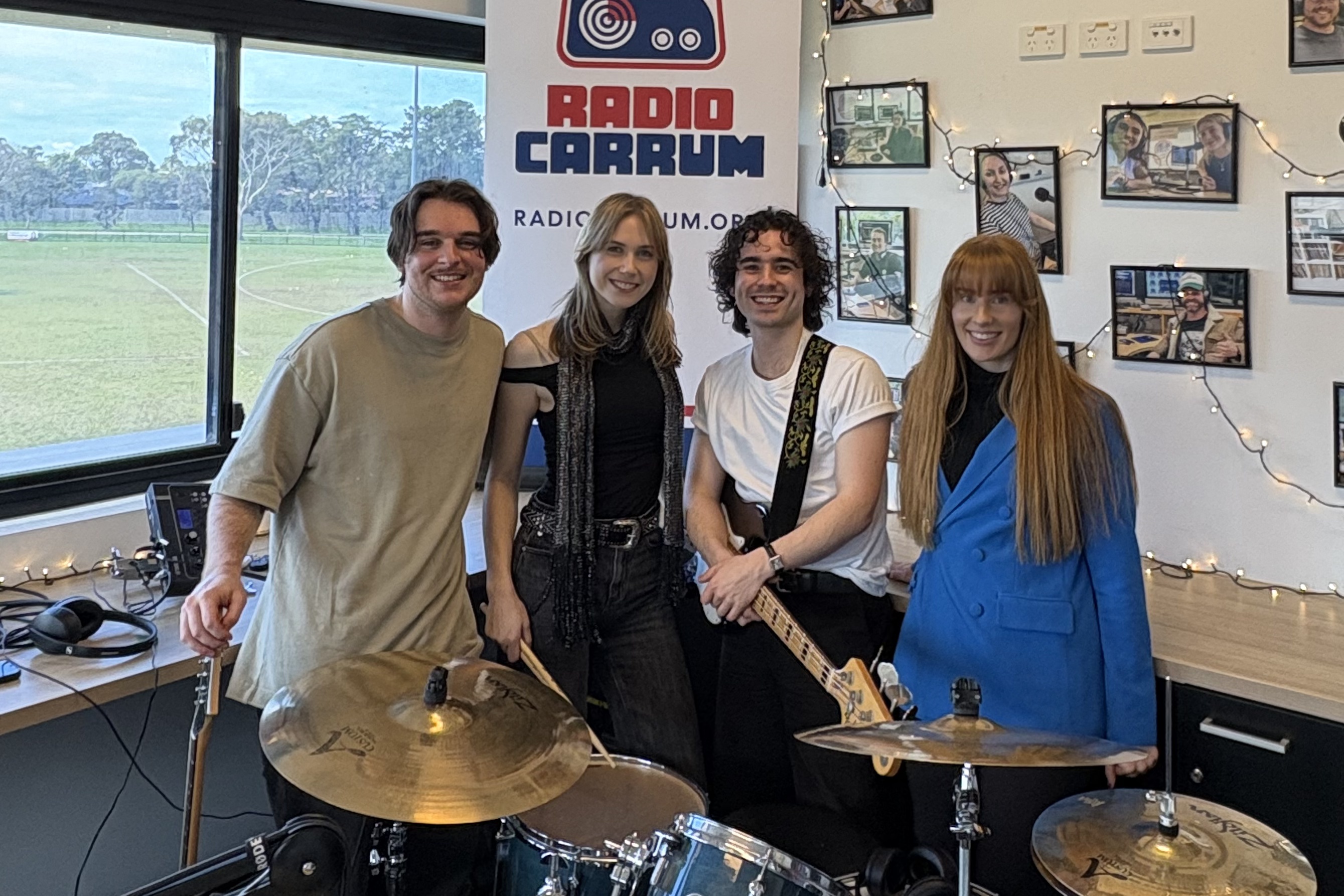
Melbourne four-piece Ramona Sky joined me along with Tina and Dan at Radio Carrum to perform ‘Hypnotise’, ‘Go’, ‘White Noise’ and ‘Losing Myself’.
Between songs, Chelsea Sharp, Jess Maio, Nick Thorne and Giac Carbone spoke about meeting online during lockdown, creating an immersive live show and holding onto real human connection in an increasingly artificial world.
The four members have the kind of easy chemistry that makes it surprising to learn they initially found one another online.
Ramona Sky began during lockdown in 2020 with Chelsea and Jess, who connected through a Melbourne musicians Facebook group.
“During lockdown, I guess we were bored, as we all were, and our old bass player posted in there saying that they wanted to start a new band with some ‘70s influences,” Jess explains.
“It really caught my attention, it caught Chelsea’s attention, and we all connected through that post.”
The original lineup changed, and Nick and Giac eventually joined the band. They had played with Nick before through his other band, although it turns out he may have slightly misrepresented his location during the recruitment process.
“I lied about my postcode,” Nick admits. “I brought myself about two postcodes closer. I just really wanted in.”
Giac’s path into the band was even less conventional. His fiancée, who was then his girlfriend, heard that Jess’s band needed a bass player and encouraged him to get in touch.
“I called Jess out of the blue after hearing that they were down a bass player,” he says.
“I was kind of like, ‘If I learn all of the songs today and send you a video of me on guitar, can I come in and try?’
“Mind you, I learnt the bass parts on guitar and used an octave pedal to go down because I didn’t own a bass.”
Despite arriving on the day the band was ready to choose its new bassist without the most basic piece of equipment, Giac got the job.
“With someone like Giac, really we should have taken it as a big red flag,” Nick says. “He didn’t own a bass.”
“I think we just liked the enthusiasm.”
Giac has since purchased a bass, which he proudly confirms is the one he brought into Radio Carrum!
“Enthusiasm goes a long way,” he says. “Trying hard still works.”
“He faked it until he made it,” Nick adds. “He didn’t own a bass, and look at him now.”
Four years into the current lineup, the internet experiment is still going strong.
THE RAMONA FLOWERS EFFECT
The band’s name arrived through a shared appreciation of the movie Scott Pilgrim vs. the World.
“We were talking about how much we loved Ramona Flowers and how cool she was,” Jess says. “We loved her purple hair.”
They wanted to name the band after her without directly using Ramona Flowers. The band initially embraced a purple visual theme in honour of the character, but that influence has gradually developed into an identity of their own.
“Now we’ve built our own thing,” Jess says.
“Our own brand,” Chelsea adds. “We all love our fashion too.”
Well, almost all of them.
When Tina asks, “Who doesn’t like to dress up?”, Chelsea answers immediately.
“Nick.”
“He’s done well,” Jess says. “He’s come a long way.”
Nick’s defence is that Giac owns enough good clothes for everyone.
The band members retain their individual styles, but what they wear is also considered part of Ramona Sky. They might settle on a colour palette for a show or shoot, then interpret it in their own ways.
Jess says. “We all have our own style, but image is a big part of our branding as well.”
A NEW-ERA RAMONA SKY
The clothes, colours and visual references are part of the fun, but the band wants the whole thing to work together.
“It’s also not just the look of things,” Nick says. “It’s very much the attitude behind things.”
Although Ramona Sky began with ’70s influences, they aren’t trying to reproduce a strictly ’70s look. Nick describes it as an attitude or stage presence that can briefly pull people away from whatever is happening now.
Giac sees the band as one complete artistic creation.
“I think an additional factor is that if the world of the band also feels like the message the music is trying to send, then you’ve got something people can really disappear into and connect with,” he says.
That thinking carries through to the live show. Ramona Sky put real effort into the transitions between songs and maintaining the atmosphere of a performance.
“We try to make our shows really immersive, so the gaps between songs aren’t really noticeable,” Giac says.
With more material now written by Chelsea, Jess, Nick and Giac together, the band is getting closer to a set that represents the current lineup from beginning to end.
“We’re not phasing out the old Ramona-era stuff because it’s bad, but just because we’re excited about the future,” Giac explains.
“We’re getting very close to a place where we can fill a whole set with stuff that was written with this new lineup.”
Will this new era change the way Ramona Sky look onstage?
“We look better!” Nick says.
A FIRST LISTEN TO ‘WHITE NOISE’
During the Radio Carrum session, Ramona Sky performed ‘White Noise’ live for the first time.
“That’s actually the very first time anyone has heard that song,” Jess revealed immediately afterwards.
This song introduces the new Ramona Sky era while opening up a subject the band has clearly spent a lot of time discussing: how artists can exist online without getting swallowed by the constant pressure to make content.
“Bringing it back to the future, that’s kind of what this single, ‘White Noise’, is about,” Chelsea says. “It’s about how we’re going in a certain direction with social media and all that kind of stuff.
“We’re trying to do our own thing as creatives and not really get caught up in that side of things.”
Of course, Ramona Sky also recognise they probably need social media. It helps people find the band, hear the songs and discover their shows. They understand the opportunity, even when the process of filming things purely to attract views can feel ridiculous.
“We have to go through that side of things, unfortunately, in this day and age to get exposure,” Chelsea says. “We don’t agree with it, but it is what it is, unfortunately.”
RAMONA SKY REALLY CARES <3
For Ramona Sky, caring about the music means caring about all of it: the songs, the images, the clothes, the performance and the people who come to see them.
“If a band shows that they really care about their image, their music and their attitude, then the audience is going to really care,” Jess says.
“That is why we care… so we can create that connection with people, especially in an age where everything is online.”
Live performance is where that connection becomes real.
“We’re massive on live performance,” she says. “We love a live show, and that’s probably our biggest asset as well.
“Getting people in a room, experiencing something together and creating that connection is so important to us.”
Nick and Giac both work as music teachers, which gives the conversation about protecting real art another dimension.
“We’re not trying to come across in a cocky way,” Nick says. “It’s just that we genuinely care. We really believe in ourselves, our music and our vision.
“Giac and I work as music teachers too. We want to make sure the next generation cares as much about music as we do, really.”
Giac sees the current moment as a strange one for artists. Music and art are more accessible than ever, while AI has dramatically reduced the amount of practical skill required to generate something that looks or sounds complete.
“Where you used to have to care a lot to express yourself, because you had to learn the skill of music, painting or whatever else to make your art,” he says. “Now you can type whatever you want to make and it pops out as a possible piece that you can then call art.”
Still, Ramona Sky aren’t interested in spending all their time complaining about the internet. The same platforms creating frustration also give the band a way to show people how much work and personality sit behind what they do.
“Social media is also a blessing, though, because we can, by means of our own effort, make it very clear how much we care and how organic our art is,” Giac says.
“We’re going to try to move into this new era of authenticity, making content without complaining about it and seeing it as a blessing.”
That enthusiasm again.
The kind that gets you into a band when you don’t own a bass. The kind that makes you lie about your postcode, coordinate your clothes and work out how to move between songs without breaking the spell.
“We yap about this so much,” Nick says. “But again, it’s just because we care. We really just want that human connection.”
From learning just enough guitar to write songs to touring nationally with Willie Watson, A.C. Saunders chatted with Ami and Tina at Radio Carrum sharing why the most personal songs are often the best ones. And why performing will always come second to writing.
This interview has been edited for length and clarity. In fact, we chatted for over an hour, so there’s lots more including Grace’s brief foray into rap, some favourite bars in Mornington ‘back in the day’ and her mum’s frankly delicious 5-star sandwiches at Barret Lane Sandwich Bar.Listen to the full interview on Radio Carrum.
AMI: A.C. Saunders, thank you for joining us.
A.C.: Thanks for having me.
AMI: Have we stressed you out yet? [Due to technical difficulties]
A.C.: No. It made me feel a bit calmer that something else went wrong. It’s broken the ice of issues.
AMI: It’s just me sweating in the corner, which makes it far more comfortable for everyone.
A.C.: We’re all sweating. It’s all right.
AMI: How the hell are you?
A.C.: I’m okay. I’m all right. I’m doing okay.
AMI: Do you find that whoever opens for you sets the tone for your show, or can you separate yourself from it?
A.C.: I haven’t had too many people open for me, but I’ve opened for a shit-ton of people.
I just went on tour with Willie Watson, which was really cool. I’ve opened for so many bands in Melbourne too. I think last year I did 44 gigs.
I think we do set the tone for each other, but I also like a mixed bill where everyone is just doing their own thing.
Home is where the postcode is
AMI: Where do you hail from?
A.C.: I’m from Mornington. I grew up in Mornington and I live up in the city now, but I’m born and bred 3931.
AMI: Do you like coming back down?
A.C.: Yeah, I do. I come down all the time. It’s a nice town.
Not as good now that Wowie Zowie is gone.
A little feral, but working on it
A.C.: I wrote ‘Goodbye, My Old Friend’ the other week. It’s sort of like a breakup song to the really bad side of myself.
In six months I’m 30, so I’m trying to mature. I’m trying to stop being such a little feral.
I wrote this little breakup song with the more immature side of me. I don’t know if it’s actually going to come to fruition. It might be wishful thinking.
AMI: I love that concept. It’s almost like those divorce parties you hear about people having. It’s really moving.
A.C.: Thank you. I really enjoyed writing it.
After I wrote it, I was going through a really good time mentally and hadn’t made too many mistakes. I was like, “Yeah, that life’s behind me.”
Then, over the following two weeks, I got into so much freaking mischief.
I guess it’s not all behind me, but maybe if I keep singing the song…
AMI: You can sing it into existence.
A.C.: Totally.
AMI: I saw something in the news the other day saying adulthood doesn’t actually land until you’re 34.
A.C.: Yeah, I read that. I was like, “Sick. That’s good for me.”
Hopefully by then they’ll say it actually starts at 42.
AMI: It’s almost like age inflation.
A.C.: Totally. People my age used to be able to buy a house and stuff. I can hardly afford dinner, so of course I’m still a teenager. Things have changed so much.
AMI: It’s kind of nice. I think there’s going to be a sense of eternal youth for people now.
A.C.: I agree. There’s no point in ageing anymore, you know?
Perfection is not the assignment
TINA: Does a new song mean there’s a new body of work coming?
A.C.: Yeah. I’ve just recorded an album with a band.
I’ve got my mate Zach on bass, my mate Sally on drums and my mate Phil on pedal steel. We recorded it at Sound Recordings with Alex Bennett in Castlemaine.
It was really cool. I haven’t really played with a band before, and we practised three times before we recorded it.
TINA: Only three times?
AMI: That’s pretty rough and ready, right?
A.C.: Yeah. Everyone in the band is freaky talented and very professional, so I could put them under the pump like that.
They were tight. I wasn’t tight.
But I don’t like things that are really perfect. If you hold yourself to that perfect standard all the time when it comes to art, you’ll never feel like you’ve done a good job.
I just aim for it to be over.
I’m really excited to release it. It doesn’t sound how I usually sound, but Phil, Sally and Zach are amazing. They took my songs and my ramblings and understood the assignment.
I’m really proud of the effort they put in.
AMI: It must be weird because, when you’re playing solo, if you bumble something you can usually just strum your way through it.
A.C.: I just make it up as I go.
But they’re really good at doing that too. Phil and I had played live together a few times before the band came together.
One day I said, “This is the song we’re going to play.” He hadn’t played it before, he didn’t know it, and I didn’t know that he didn’t know it.
But he played it really well. Nobody knew.
That’s how freaky talented they are. I’m not that talented. I can’t do that. But that’s why I write the songs – nothing I do is wrong if I wrote it.
AMI: Jamming is such an underrated skill.
A.C.: It is. I have a mate, Jake, who hasn’t been playing guitar for very long, and we jam together.
As long as we know the groove, and I know his ability, I’m not going to pull out something that makes him go, “What are we doing?” That would be so mean.
TINA: But can you push him to get better?
A.C.: No, because I don’t think I’ve ever tried to get better at music. I just really enjoy it.
The more you enjoy it, the more you do it, and the better you become over time.
I know most people want to be the best they can be, and that’s great, but I don’t push myself and I wouldn’t push him.
Sometimes we’ll catch up and one of us will play something, and the other person will be like, “Oh man, you learnt something new.”
And it’s like, “Yeah. It just came to me one day.”
If you keep playing, you come up with your own little sound and your own way of playing. That’s what I’ve done.
Cowboy chords and big feelings
AMI: Is that something you’ve intentionally steered yourself towards, or do you literally go with the flow?
A.C.: I started playing guitar when I was 10 and I’m 29 now.
My aim as a child was just to be able to write songs and know enough chords to write them. Once I knew the basic chords – the cowboy chords – I was like, “Cool, I’m done,” and quit guitar lessons.
From there, I’d hear something in my head and think, “I want to learn how to play that,” so I’d spend a while figuring it out.
Basically, every time I get better at guitar, it’s because I want to write a song with better guitar.
But sometimes I still write songs with just D, G and E minor.
AMI: Do you haunt certain chords? Do you keep coming back to them and think, “Not again”?
A.C.: I even have songs with the exact same chords. If you can sing a different song over them, then that’s okay.
Some people put a lot of pressure on what it means to be a “real musician”. But my goal is to write songs.
I’m never going to be embarrassed about playing the same cowboy chords all night long.
AMI: Whatever you’re doing, keep doing it. Do you consider yourself a songwriter and singer first and foremost?
A.C.: I’d say I’m a songwriter.
I wouldn’t say I’m much of a performer. Some musicians are wicked performers and one thing I hear all the time is, “The stage is my home.”
Absolutely not.
The stage is somewhere I have to be, and I’m panicking.
I’m more of a songwriter than a musician, a performer or even a singer.
AMI: You’re a storyteller too. There’s songwriting, but then there’s storytelling within your songs.
TINA: Where do your ideas come from?
A.C.: My ideas come from specific things that are happening in my life.
Sometimes they come from my friends’ lives too. If a mate of mine is going through a really hard time and I’m stressed about them, that’s going on in my life too.
Songwriting is an outlet for my emotions. When the emotion is too big, it becomes a song.
AMI: It’s your diary.
A.C.: Totally.
Sometimes your emotions are really big because you’re about to get your period, so you write this crazy, dramatic song. Then a fortnight later, you’re like, “What was that about?”
AMI: It would be funny to catalogue your songs based on where you were in your menstrual cycle.
A.C.: You can tell.
If you hear one and I’m really angry, you’re like, “Oh yeah, I know where she’s at.”
Then there’s the loved-up phase where everything is fun.
AMI: All your sexy ovulation songs.
A.C.: There are songs about feeling myself, and then there are songs about hating myself.
The closer to the bone, the better
AMI: When you’re writing, do you ever think, “Too personal, too personal”? Or is it always anything goes?
A.C.: I reckon when it’s not that personal, I’m like, “This is embarrassing. I’ve made this up. What the hell am I talking about?”
I’d like to write songs about politics. I wrote one after thinking about people being trapped under concrete. I was sitting on a concrete balcony in the sun and thinking, “Fuck, man. That really sucks for them.”
War and the goings-on in the world haunt my brain, but I don’t actually know how those people feel because I’ve lived in fucking Mornington and Richmond my whole life.
I write songs about what’s happening in the world, but then I think, “I don’t know their feelings and I don’t want to speak for them.”
I tend to write specifically about my feelings, my point of view and my world. That’s what I know about.
If I ever find that I’m not being truthful to my experience, or what I think and feel, it becomes a bit cringey. I’m just singing out of my arse a little bit.
The more personal and revealing, the better.
AMI: Were you always like that, or is it something you’ve learnt over time?
A.C.: My mum taught me to be a really honest person. That was a big lesson in life: to always be honest and real.
TINA: It’s always good to be an open book. If you’re yourself, life is better. You don’t have to fake anything.
A.C.: If you fake it and people don’t like you, you’re like, “Damn it. I should have just been myself.”
And if they don’t like you for you, then good.
Grace, Gracie, A.C., Ace
AMI: Your name is Grace, but you go by A.C. Saunders. Where did the name come from?
A.C.: People call me Gracie, but I don’t really like that.
I don’t mind my friends calling me Gracie, but when random people do it, it’s weird.
The origin is Gracie: the “A.C.” at the end.
Then I thought a great nickname for me would be Ace. For five or six years I was really trying to get that to catch on. A few friends do call me Ace, and I really appreciate that.
AMI: Are we still trying to make Ace happen?
A.C.: Nah. Now people just call me A.C., and that’s cool.
There are also so many Graces in music. I figured I’d use my own name and a new name.
TINA: And Saunders?
A.C.: That’s my last name.
AMI: A legitimate government name.
One person who definitely calls you Gracie is Roscoe, aka Slim Krusty. We couldn’t do this interview without mentioning that.
You two are really good friends, and he was so proud to share that. He was raving about you.
A.C.: Legend. He’s such a dag.
AMI: Have you made any other special friendships through music? You and Roscoe play together a lot.
A.C.: Roscoe and I have a song together. It was really cool, but then we had a few disagreements about what we wanted the other person to say.
He’s like, “We should get back to that song.”
I’m like, “You forgot, man. We had pages of discussion. I was sold on this and you hated it. You were sold on that and I hated it.”
But it’s a really cool song. We will play it. We love playing together.
Touring with Willie Watson
TINA: I wanted to ask about Willie Watson. How did his Australian tour come about for you?
A.C.: I have a booker, Sean Simmons from Press Play Presents. He got in contact with Love Police and got me booked for the tour.
It was such a cool experience. Willie is such a cool guy.
I had more downtime because he was playing festivals between our shows. He also played in Cairns, and I didn’t go to Cairns because that would have really blown the budget.
I chilled out for four days and did nothing in Queensland while he was working like a dog. He had no spare time.
He’s a hardworking man. A really cool, fun guy.
What does success look like in 2026?
AMI: Is that the level of success you’re aspiring to, or does it look like too much of a slog?
A.C.: I don’t really know.
If you were to talk to Willie about whether he feels successful in music, I think you’d find it a really interesting conversation. Success in music is gauged by so many different things.
You could be the most commercially successful musician in the world but still feel like you haven’t succeeded because your bar is set so high, or because you’re not happy with the work you’re putting out.
At the end of the day, if I could make enough money from music to not have another job, that would be mad cool. That would be one idea of success.
But Willie has a clothing label. He works like a dog outside of music as well. Willie is freaky successful, but he still has to work really hard at other things at the same time.
I’m contemplating becoming a nurse at the moment, which would mean music might stop for a bit—or quite a while.
The slog to become successful as a musician means putting your whole normal-life success on hold. I can’t afford a holiday. I’m always going to be renting in share houses and stuff like that.
The idea of being a successful musician is so weird in 2026.
AMI: It’s super tough out there.
A.C.: It is. Other musicians say, “You’ve got to love what you do.”
I love what I do, but I love eating as well.
I can be a nurse and still write songs on the weekend. Just because people aren’t hearing them as much doesn’t mean I’m not a musician or a songwriter.
You’ve got to fill your own cup. Maybe becoming commercially successful won’t actually fill your cup.
AMI: Even before you reach that level, there’s the experience of people perceiving you all the time.
We were talking before we went on air about speaking on Instagram and how you have to craft the way you say things. You don’t want to sound overexcited or inauthentic.
A.C.: Or like an influencer. I don’t want to sound like…
TINA: You don’t want to be putting it on.
AMI: No matter how much you like someone on the internet, they inevitably end up saying, “I just wanted to jump on…”
A.C.: Not the “jump on”.
“Hey guys, just wanted to jump on and say…”
It’s supposed to sound casual. You’re just jumping in.
I really struggle to promote myself. I end up getting monotone and blank-faced, and it’s awkward.
Slim Krusty loves yapping on Instagram. He loves promotion. He just chucks it up and he’s always funny.
Maybe I should get Roscoe to do my promo, but no, I shouldn’t. He’d make it terrible.
AMI: He’d pick the wrong photo.
A.C.: He’d pick the wrong photo, and he likes to say A.C. stands for “Assault Charge”.
He says the silliest things.
One cover only
AMI: What do you listen to?
A.C.: A mix of everything. I love Kurt Vile forever and Gillian Welch.
TINA: I saw that you did a cover of ‘Look at Miss Ohio’. It’s so beautiful.
A.C.: I love that song. It has such a good story.
I also love how she says “ragtop”, meaning a convertible. I’d never heard that term before. I was like, “That’s such a sick term. Now I want a convertible.”
AMI: Just so you can say, “I’m going to jump in my ragtop.”
A.C.: Yeah. “With my ragtop down, driving around town.”
AMI: Do you like playing covers?
A.C.: No. Just that one. That’s my cover.
When I was about 10, my guitar teacher (shout out to Jeff) told me you should never play a cover in public unless you think it rivals the original.
You have to love the song. Don’t do a cover if you don’t feel the cover, because people can tell when it’s shit.
I’ve covered lots of songs I love and I love singing them at home. But when I started playing ‘Look at Miss Ohio’, I was like, “This is my jam. This is my song.”
I feel every word. I can picture the scenarios around every lyric, so I sing it as though it’s one of my own.
AMI: I love that you have such a high standard for your covers.
A.C.: Tell a 10-year-old, “Never do a cover unless…” and that will stick with them.
Writing songs, not chasing stages
TINA: Will you be touring? Do you have plans to go overseas or play festivals?
A.C.: I’d love to go overseas. Slim Krusty was trying to get me to go to the UK with him, and I was like, “Yeah, cool, Captain. I’ve got no money.”
At the end of the day, the music isn’t going to fund the trip. I’m going to fund the trip.
I’m probably more likely to go on a little holiday somewhere nice than do a tour. But if a band asked me to go overseas with them, it was a good deal, I could drive with them and the hotels were cheap, I’d definitely do it.
If I’m buying flights and all of that, it’s an impossible feat.
I’m going to release this record, and I might do some shows around Australia. We’ll see.
But I’m really excited to record and release my next record because I’ve already got the songs, concepts and everything ready to go.
Like I said, I’m a songwriter. I’m not much of a performer.
I don’t dream about touring and performing. I dream about writing songs – writing songs about my feelings.
It would be cool if I could tour them. I think the day I go on big tours will be the day I have an audience that will buy the tickets. When it’s almost guaranteed that enough tickets will be sold for me to at least break even, then you’ll be seeing me.
AMI: Otherwise, it would be frustrating going overseas and constantly having to post, “Who’s coming tonight? Who’s coming?”
A.C.: Promotion is hard. One day, hopefully, I’ll get better at it.
TINA: It’s been so great having you here.
A.C.: It’s been great being on. I’m glad it worked this time.
This is my first time being interviewed by ladies, and it was wonderful. Way better than men.
We have a similar understanding of the world – and a warmth that a lot of male interviewers don’t have.
AMI: Thank you! It’s been amazing.
Keep up with A.C. Saunders
A.C. Saunders has a new album on the way and you should try to catch her live at any opportunity that pops up cos she is an actual legend.
‘He was a really kind guy’: Mary Renshaw remembers Bon Scott as he would’ve turned 80
To mark what would have been Bon Scott’s 80th birthday, I spoke with Mary Renshaw – one of Bon’s closest and longest-standing friends.
Mary co-wrote Live Wire: A Memoir of Bon Scott by Three People Who Knew Him Best with John D’Arcy and Gabby D’Arcy, sharing a side of Bon that existed beyond the swagger, danger and rock’n’roll mythology.
Here, Mary remembers meeting Bon as an 18-year-old, making his clothes, watching AC/DC’s rise and the kind, funny and down-to-earth man behind one of rock’s greatest frontmen.
This interview has been lightly edited for clarity.
AMI: In honour of Bon Scott’s 80th birthday, we’re speaking to Mary Renshaw, one of Bon Scott’s besties from way, way, way back. She co-wrote the awesome book Live Wire with some of his other besties, and I’m also lucky enough to have her as a family member.
Mary, thanks for chatting with us on Radio Carrum.
MARY: Hi, Ami. How are you going on this cold Melbourne morning?
AMI: I’m freezing. I forgot to put the heater on in time, so I’m just hoping it warms up soon.
Are you keeping warm?
MARY: Yes, I am keeping warm, but I’m also packing because I’m going to celebrate Bon’s birthday in Darwin with my bestie Sarina. We’ve got our evening organised to celebrate just for him.
AMI: Beautiful. What does a celebration for Bon Scott’s birthday look like these days? Champagne, champagne and more champagne?
MARY: Usually, yes. Champagne and more champagne.
As I’ve gotten older, maybe a little bit less champagne and more really nice food with that champagne. But we’re definitely having some yummy birthday cake too.
AMI: Can you believe Bon Scott would be turning 80?
MARY: It’s pretty full-on, seeing as I met him in 1968 when I was 18. We stayed friends right up until the time he passed away in 1980.
For a while, I celebrated his birthday every year with his ex-wife Irene, from Bon’s Fraternity days. We’d always go out for a bit of a drink. Not so much food in those days, but definitely food nowadays.
AMI: I love that. Obviously, Irene passed away not too long ago, which was a terrible loss as well.
MARY: Yes. We’re going to put a little photo of Irene on our table outside in the sunshine. We’ll have a glass there for her too.
A pair of hippie beads at 10th Avenue
AMI: You mentioned that you met Bon when you were quite young – a teenager.
MARY: Yes, I was 18.
AMI: That’s so crazy, and I love this story. I won’t tell it, though. You can.
How did you meet Bon Scott?
MARY: I met Bon at an afternoon venue called 10th Avenue, which was quite a popular underage drinking place.
There weren’t very many rock’n’roll places where you could drink – or that served alcohol – in those days.
I was at 10th Avenue and he was in a band called The Valentines at the time.
During one of the breaks, I was downstairs. He came up to me and started asking about the beads I was wearing. They were hippie beads that I used to make for myself.
He asked if I could make some for him, and we basically became best friends from then on. We were always close friends over the years.
AMI: Did you end up making him some beads?
MARY: Of course I made him beads.
Another time I was wearing a little black velvet bolero that I’d decorated with sequins and stuff, and I made him one of those too.
Over the years, I think I made him a few different bits and pieces of clothing. I made some cool T-shirts with patches of snakeskin sewn onto them, and other things with diamantes.
AMI: That’s amazing.
MARY: He was fun to dress.
And undress.
AMI: I love that.
Tough enough, but kind
AMI: A lot of people think of AC/DC, and particularly Bon, as that wild frontman. This icon and legend with danger, swagger and rock’n’roll about him. Almost like a hard bloke.
But what about when the volume was turned down and he was in a more vulnerable state? What version of Bon do people not really recognise?
MARY: I was thinking about this last night. I was thinking about all the boys in AC/DC.
They all came from pretty roughish beginnings.
Mark was living in the commission flats in Prahran, and Prahran was pretty rough in those days. Angus and Malcolm had come over from Glasgow and were living in what was probably a poor area of Sydney.
Phil Rudd liked to steal cars and came from Preston, or wherever it was on the other side of town.
Bon was a few years older than them, but he’d obviously had to toughen up a little bit too.
All the new Australians who came here, whether they were from Europe or the UK, copped a bit of flak. You had to learn to stand up for yourself.
But all of those guys were really nice guys. You’d always want them there to back you up in a fight – and they would – but Bon was well-mannered. He loved his mum and dad. He came from a good family. He was fun and friendly.
The boys used to bring a roast around and I’d cook it for them.
They were just basic blokes with a lot of talent.
MARY: Bon was a really kind guy. He was a real good guy.
That’s why men loved him, women loved him and parents loved him.
AMI: He had a real warmth about him.
There are Bonfests all over the world now, and he remains such a legend to people. He’s constantly included on lists of the greatest frontmen to have ever lived.
Do you think it was that combination of private Bon and stage Bon that made people connect with him?
MARY: He was a fairly down-to-earth person.
The last time he was in Australia, we were at one of the nightclubs and there was a VIP section there, which I was used to always being in.
He was like, “Nah, I’m not going up there.”
He just wanted to hang out with the punters and have a chat with everybody.
But he was a massive showman too. It was this weird combination of being a guy who looked tough, ballsy and rock’n’roll on stage, but it was a big persona.
That showmanship also came through as him just being human. Really likeable.
The calling of AC/DC
AMI: I’ve always been curious about when he first joined AC/DC.
I remember reading in Irene’s book about him scoping them out and really considering, “Am I going to fit in here? Is this for me?” before giving it a go and owning the stage with them from the beginning.
MARY: His marriage to Irene was a little bit up and down at the time.
After leaving Fraternity and seeing the AC/DC boys, I think he was wondering, “Should I or shouldn’t I? Should I stay here in Adelaide and try to work on my marriage?”
What he told me was that he’d played with the band and done a little bit of rehearsal – or whatever they were doing. It wasn’t really a rehearsal. It was more like a jam.
Then they went back on the road to Sydney and he was starting a new job in some factory.
He started walking to work and then just went, “Fuck this.”
He packed his bags, left Adelaide and went to join AC/DC.
AMI: He had the calling.
MARY: It was the calling.
I think he was just like, “I’m too young to live a nine-to-five life.”
AMI: Which he wrote a song about.
MARY: Exactly.
He always wanted to be – not so much famous – but a well-known rock singer.
He probably gave up a lot for that. But he is a legend now.
Bonfest and a legacy that helps young musicians
MARY: I’ve been going to Bonfest for years. Punters come from all over the world.
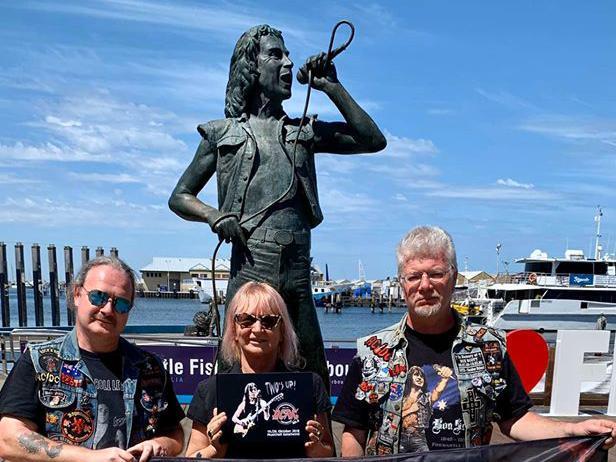
They got a whole lot of money together, along with DD8 Music, which runs Bonfest, and put the statue up in Bon’s Scottish hometown of Kirriemuir.
I was really lucky to be there to unveil that statue. Bonfest just gets bigger and better every year.
AMI: It’s incredible. From the photos I’ve seen, it looks amazing.
A statue of him! What do you reckon Bon would think of it all?
MARY: I think he’d be blushing, really, because it’s a little bit much.
But he’d also be loving it. I think he’d be so happy that all these people come from all over the world and have such a great time.
All the money DD8 Music makes goes back into it. It’s a charity organisation that helps provide instruments for kids who want to learn and play music.
For Bon to feel that he’s still doing something really good for young people, I think he’d love that.
AMI: That’s an incredible legacy.
MARY: Exactly. It’s not there to make people rich. It’s there to help kids.
What was Bon like at parties?
AMI: I’ve never asked you this before, but what was Bon like at parties?
With someone like Bon, you might imagine he’d be the star of the show in every room. Was he like that, or was he more of a watcher?
MARY: Not at all. He just wasn’t that sort of person.
People would flock to him, though.
When he came to take me to lunch while I worked at the In Shop, my design room was upstairs.
It was a big shop and there was a record bar at the front. By the time he got through the front door, reached the lift and came upstairs, it would take a while because he’d be signing autographs.
Then, by the time we went back downstairs to leave the shop and go to the pub next door to get drunk, there would be heaps of people wanting his autograph.
We’d also have to go to Coles first because he’d need to buy a pair of thongs. He always walked around with no shoes on during summer.
We’d buy him some thongs, then we’d go to the pub.
AMI: That sounds perfect. A perfect way to spend your lunch, really.
What sorts of things made Bon laugh? What kind of sense of humour did he have?
MARY: He was pretty funny. Sometimes he had a bit of a dirty sense of humour – obviously, like his music.
But he laughed easily. Just normal stuff, really.
Sometimes the boys would come to lunch with us and we’d all have a giggle about anything.
Watching a friend become a superstar
AMI: It must have been interesting knowing someone before they became this legendary name and watching that evolution.
What was it like seeing Bon go from your friend who asked you to make him beads to this superstar?
MARY: It was pretty full-on.
They started as just these guys, and then suddenly Bon was writing to me about what was happening overseas, the audiences they were getting and who they were playing with.
I’ve still got a few letters from him.
When he came back to Melbourne, he might talk about it a little bit, but he wasn’t that interested in talking about all of that. He was more interested in having fun with his friends and family.
Even now, when I go to shows and see how many people are there, it brings a tear to my eye.
When I went to see AC/DC in Berlin and France, I couldn’t believe the number of people there.
You see the Australian audiences, but I knew them when they were playing in really small venues and pubs. Then suddenly, over there, they were playing in front of 100,000 people or whatever it was.
It was hard to comprehend.
After Bon passed away, I saw what it was like throughout Europe. Then, of course, with all the shows they did with Brian Johnson after Bon passed, they just kept getting bigger and bigger.
It was pretty full-on.
It still pisses me off that Bon didn’t get the money. The money came in later, if you know what I mean.
AMI: Absolutely. It’s often the way for true artists.
You hear it all the time with painters, photographers and fashion designers too. Maybe there’s something about appreciating what you had once it’s gone.
MARY: Bon wrote ‘Ain’t No Fun (Waiting Round to Be a Millionaire)’, but he missed that last little bit.
The millions came in later. Not that much later, but obviously after he passed away.
They were touring throughout Europe and the UK and were already very, very popular. They were just waiting to break the American market.
The new album was going to be the one.
He didn’t say it was going to be called Back in Black, but he was 100 per cent sure this new album they were going to make would break them in America.
America was already starting to love them. It was just about getting that top album recorded.
If it didn’t make it, he thought he might have a rest because they’d flogged themselves travelling around the world. It was a really hard slog.
America was going to be the one.
AMI: Was he pretty burnt out towards the end?
MARY: He was pretty burnt out. He was tired, and he really wanted this album to be the one.
If it wasn’t, I think he might have given it up.
But really, that wasn’t in his spirit. He didn’t truly think that was going to happen.
He was tired, but he was really looking forward to getting the new album done. He was joyful about it.
AMI: He was ready to hit that next level.
MARY: Yeah. “America’s going to love us.”
AMI: And they do.
MARY: You only have to go to Bonfest and see people travelling from all over the world.
People love AC/DC as they are now, but they also just love old AC/DC – and they love Bon.
Dressing the next generation of Bon Scott fans
AMI: When you go to Bonfest, you make those cute little outfits for the kids with AC/DC and Bon Scott patches on their jackets.
It feels like a beautiful full-circle tribute. When you first met Bon, you were making him things through your fashion background. Now you’re doing it to carry on his legacy.
Did you plan it that way, or did it just happen?
MARY: I didn’t plan it that way.
I saw all the adults at Bonfest wearing those little cut-off denim jackets with patches all over them. I thought, “Maybe I should make some.”
Then I realised it would be so much work.
I thought, “No, little kids need them. They’re going to look so cute on little kids.”
I buy little denim jackets from the op shops and decorate them. They look fabulous on the kids, and the kids love them.
AMI: They look so good. I love them.
I won’t keep you much longer because you have to go and celebrate Bon’s birthday.
MARY: Yes. I’m just going to finish the last of my packing.
AMI: Then you’re off to sunny, warm Darwin, which will be a little nicer than Melbourne.
MARY: Yes, for sure.
‘Follow your dream’
AMI: There are so many deeply committed Bon Scott fans.
What do you think he would want to be remembered for? I know you probably don’t want to speak on his behalf, but is there a human detail, gesture or habit that has stayed with you – something you think people should know?
MARY: I think he’d like to be known as the legend he is, really – and as a good guy.
Don’t give up. Follow your dream.
AMI: I love that.
MARY: It’s as simple as that.
He worked hard for his dream. What happened, happened in the end.
But now look at him. He’s a legend.
AMI: He sure is.
Thank you so much. Enjoy toasting Bon and have one for me.
MARY: I definitely will.
AMI: For anyone interested in reading more about that human side of Bon Scott – the man, rather than only the wild frontman – Mary’s book Live Wire is a fantastic read.
There are plenty of surprises in there, and I reckon you’ll feel like you know him by the end of it.
MARY: I think so too.
AMI: Thank you so much, Mez. Have a wonderful time in Darwin – and happy birthday, Bon Scott.